

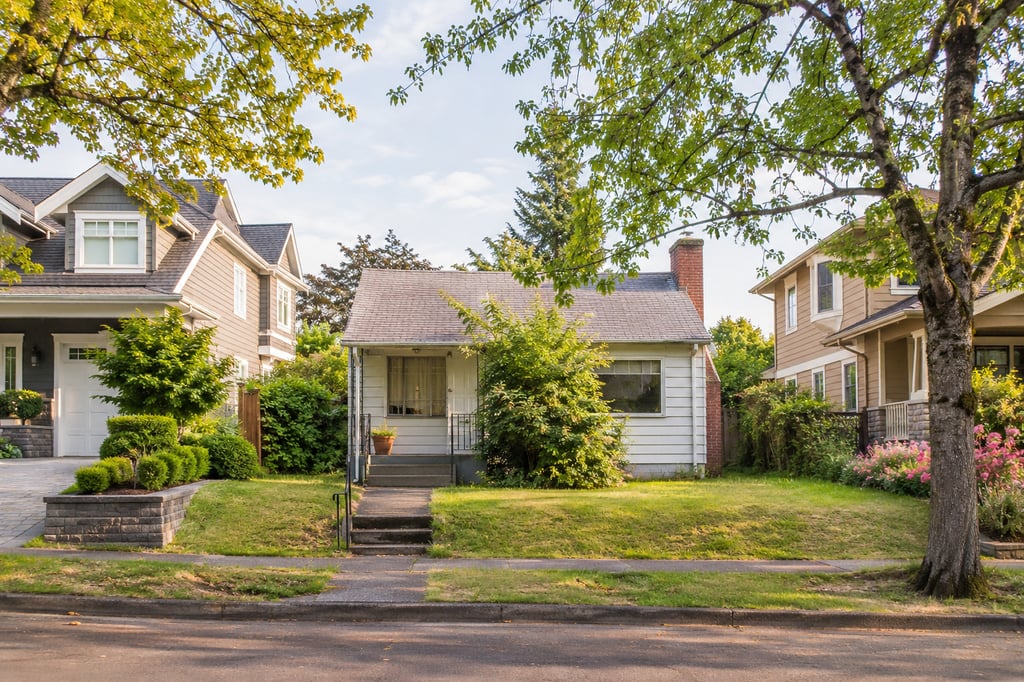
It’s one of the oldest pieces of advice in real estate. But is it actually good advice?
If you’ve spent much time looking at homes for sale, you’ve probably heard this familiar real estate wisdom:
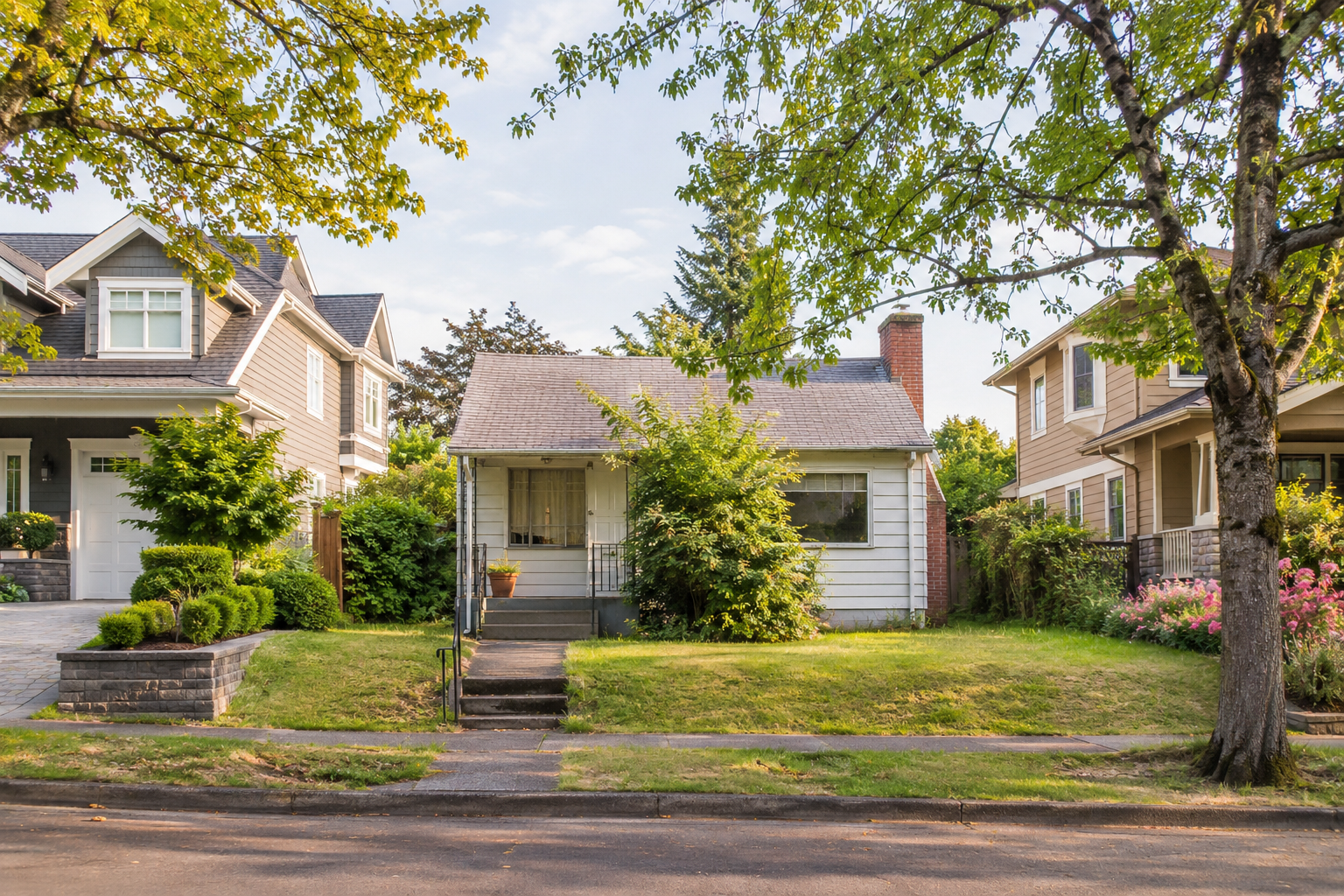
“Buy the worst house in the best neighborhood.”
The thinking is pretty straightforward. You can improve a house, but you can’t change its location. Buy a less desirable home in a great neighborhood, make some improvements, and enjoy the benefits of living somewhere you might not otherwise have been able to afford.
And there’s certainly some truth to that. But like a lot of conventional wisdom, this advice sounds considerably better when it’s reduced to a catchy sentence. In reality, buying the worst house in the best neighborhood can be a smart real estate investment. It can also be an expensive, frustrating mistake.
Let’s look at both sides.
Why Buying the Worst House in the Best Neighborhood Can Make Sense
First, let’s give this advice the credit it deserves.
Location matters. A lot.
In the Portland real estate market, as in most housing markets, location plays a significant role in determining property values.
School districts, commute times, neighborhood amenities, walkability, nearby parks, and the general appeal of an area can all influence what buyers are willing to pay. A beautifully remodeled home in a less desirable location may have a lower market value than a dated, smaller home in a highly sought-after neighborhood.
That’s not necessarily fair, but the housing market isn’t particularly concerned with fairness.
There are some genuine advantages to buying a less expensive home in a desirable neighborhood:
- Lower entry price: You may be able to purchase in a neighborhood that would otherwise be outside your budget.
- Potential for appreciation: Improvements to a dated or neglected home may increase its value, particularly when surrounding properties support higher prices.
- Access to neighborhood amenities: You get the benefits of the location without necessarily paying the price of the nicest house on the block.
- Opportunity to build equity: Strategic renovations may improve both your enjoyment of the property and its resale appeal.
There’s also an old real estate concept called over-improvement. It’s possible to spend so much money improving a home that its value exceeds what buyers are generally willing to pay in that location. Buying a modest home surrounded by more expensive properties may provide some room for improvements without immediately running into that problem.
So far, so good.
But here’s where I think buyers need to be careful.
1. You Might Sacrifice Too Much of the House You Actually Want
Imagine you’ve been searching for a home with four bedrooms, a comfortable backyard, a two-car garage, and enough living space for your family.
Then you discover a house in a highly desirable neighborhood. It’s smaller than you wanted. The garage barely accommodates one car. The backyard is tiny. And the fourth bedroom is more of a suggestion than an actual room.
But the neighborhood is fantastic! So you buy it. And for the first few months, you’re thrilled to live there.
Eventually, however, the excitement of the location becomes part of your everyday routine. Meanwhile, the things you compromised on remain compromises. The garage doesn’t get bigger. The backyard doesn’t magically expand. And that fourth bedroom is still suspiciously similar to a closet.
A great neighborhood doesn’t automatically make an inadequate house a great home.
Before sacrificing important features for location, buyers should distinguish between what they want and what they genuinely need. Cosmetic finishes can change. Floor plans can sometimes change. But certain limitations may be difficult, expensive, or impossible to overcome.
2. Being the Least Impressive House on the Block Can Get Old
Here’s something that doesn’t get discussed enough.
People don’t experience their homes strictly as financial investments. They experience them as places where they live. When you first buy the least expensive house in an upscale neighborhood, it may feel like you’ve gotten away with something. You have access to the same streets, parks, schools, and amenities as your neighbors, but you paid considerably less.
Excellent!
But over time, you might start noticing things. The neighbor has a beautifully landscaped yard. The house across the street has a gorgeous new kitchen. Three doors down, someone just finished a stunning exterior renovation. Meanwhile, you’re still trying to figure out why your bathroom fan sounds like a helicopter preparing for takeoff.
There’s nothing inherently wrong with owning the smallest or least updated home in the neighborhood. In fact, some homeowners are perfectly content with exactly that arrangement. But others may eventually feel dissatisfied.
Which leads to another consideration.
3. House Envy Is a Real Thing
I don’t think buyers should underestimate the psychology of homeownership.
We naturally compare our circumstances to those around us. And when your home is consistently smaller, older, or less attractive than the surrounding properties, those comparisons can become difficult to ignore. You may find yourself wanting improvements you never particularly cared about before. A larger kitchen. Better landscaping. A more impressive entryway. A remodeled primary bathroom.
It’s not necessarily because those improvements would make your life substantially better, but because everyone around you seems to have them. Suddenly, the affordable house you purchased to get into a desirable neighborhood becomes an ongoing source of expensive projects. And there’s an important distinction between improving a house because you want to and improving it because you feel you need to keep up.
The first can improve your quality of life. The second can become a very expensive competition.
Of course, not everyone experiences house envy. But if you know that your surroundings influence your expectations, it’s worth considering before you buy.
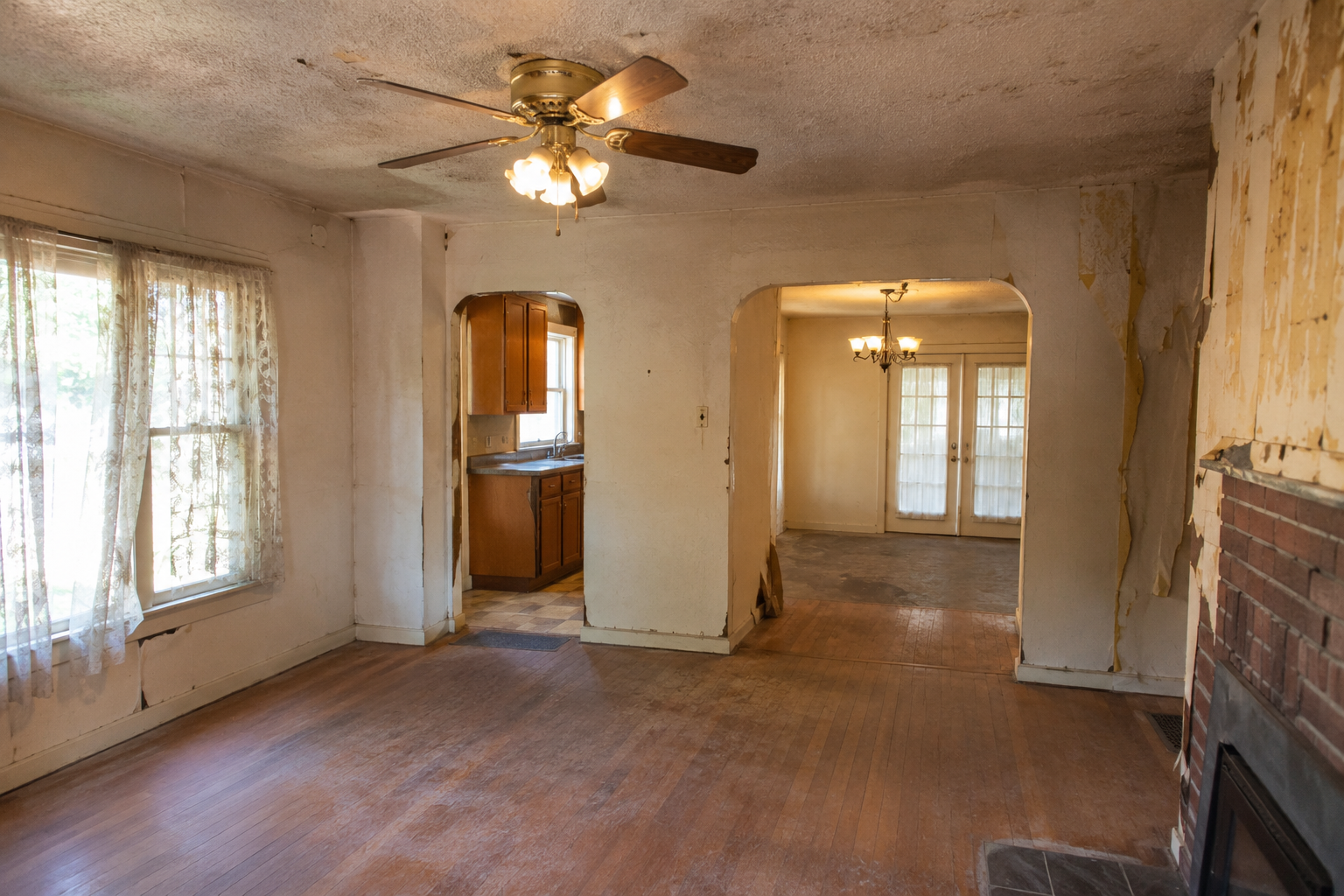
4. The Worst House Might Also Be the Biggest Project
There’s a big difference between buying the least attractive house in a neighborhood and buying the house with the most problems. One might be a terrific opportunity. The other might be a money pit.A house with dated cabinets, old carpet, and questionable wallpaper may be relatively straightforward to improve. A house with foundation issues, outdated electrical systems, failing plumbing, significant moisture damage, or a deteriorating roof is another matter entirely. And in the Portland area, where we have plenty of older housing stock and no shortage of moisture, deferred maintenance deserves particular attention.
Buyers should be especially careful about confusing cosmetic problems with structural or mechanical problems.
Before purchasing a fixer-upper, consider the full cost of ownership:
- Purchase price and closing costs
- Immediate repairs and deferred maintenance
- Planned renovations
- Unexpected expenses
- Financing costs and available cash reserves
- The time and disruption involved in completing the work
A $550,000 house that needs $150,000 in improvements isn’t necessarily a better deal than a $675,000 house that’s already in good condition. Especially if the renovation budget turns out to be optimistic. And renovation budgets have a remarkable ability to be optimistic.
5. The “Best Neighborhood” Might Not Be the Best Neighborhood for You
This is perhaps my biggest objection to the traditional advice.
Who decided which neighborhood is the best? A neighborhood with expensive homes, highly rated schools, and beautiful landscaping may be desirable to a large number of buyers.
But that doesn’t automatically make it the right place for you.
Maybe you prefer having more land and fewer neighbors. Maybe you want to be able to walk to restaurants and coffee shops. Maybe you work from home and don’t particularly care about commuting. Maybe you would rather have a larger house in Milwaukie than a smaller one in Lake Oswego. Or a home with more space in Clackamas instead of a more expensive address closer to downtown Portland.
None of those preferences is inherently right or wrong.
They’re personal.
The best neighborhood isn’t necessarily the most expensive neighborhood. It’s the neighborhood that best supports the life you want to live.
Buying a house primarily because other people consider the location prestigious can be a poor substitute for deciding what actually matters to you.
6. You Might Spend More Than the Neighborhood Can Support
There’s another financial risk that deserves attention.
Even in an expensive neighborhood, not every improvement adds dollar-for-dollar value to a home. Suppose you purchase a smaller, outdated house for $500,000 in a neighborhood where many homes sell for $750,000 or more. You might reasonably assume you have plenty of room to invest in improvements.
But there’s a catch.
Those more expensive homes might have larger lots, better floor plans, additional bedrooms, larger garages, or architectural features that your property simply cannot duplicate. Spending $200,000 remodeling your house doesn’t automatically make it comparable to the $750,000 homes nearby. Buyers still consider square footage, functionality, lot characteristics, and other features when evaluating properties. Before undertaking major renovations, it’s wise to evaluate comparable home sales and consider whether the proposed improvements are likely to be supported by the market.
Otherwise, you may discover that you’ve created the nicest version of a house that buyers still consider fundamentally limited.
7. The Opportunity Cost Can Be Significant
Here’s one more consideration that often gets overlooked.
When you stretch your budget to purchase in a more expensive neighborhood, you may have less money available for everything else. Vacations. Retirement savings. Home improvements. Emergency reserves. Or simply enjoying your life without worrying about the next expensive surprise. And if your mortgage payment is already near the upper end of your comfort zone, those necessary repairs can become especially painful.
A home should contribute to your financial stability, not constantly compete with it.
Sometimes buying a more comfortable, move-in-ready house in a less expensive neighborhood provides a better overall lifestyle than stretching financially to purchase a fixer-upper in a prestigious location. That’s not always the case, of course.
But it’s a legitimate alternative that deserves consideration.
So, Should You Buy the Worst House in the Best Neighborhood?
Sometimes, absolutely.
I think the strategy can work particularly well when the house is structurally sound, the necessary improvements are manageable, and the location genuinely fits the buyer’s lifestyle.
It can also make sense when the home’s shortcomings are mostly cosmetic rather than functional.
But I would approach the decision with a few important questions:
- Would I still want this house if I weren’t so impressed by the neighborhood?
- Am I compromising on features that will matter to me every day?
- Can I comfortably afford both the house and the improvements it needs?
- Will the finished home meet my needs, or will it always feel inadequate?
- Am I buying this neighborhood because it fits my lifestyle, or because other people consider it desirable?
Those questions are at least as important as the potential resale value.
My Advice: Buy the Right House in the Right Neighborhood
I’ve helped buyers and sellers throughout the Portland metro area, and one thing I’ve learned is that real estate decisions rarely fit neatly into universal rules.
Location matters. Condition matters. Price matters.
But so does the experience of actually living in the house.
A home that looks like a terrific investment on a spreadsheet might be a frustrating place to spend the next ten years.
And a house that isn’t in the most prestigious neighborhood might turn out to be exactly the right place for your family.
So I’d modify that old real estate saying just a little:
Don’t buy the worst house in the best neighborhood. Buy the house that best balances location, condition, affordability, and the life you want to live.
It’s not quite as catchy.
But it’s considerably better advice.
Thinking about buying a home in Portland, Happy Valley, Clackamas, Milwaukie, or elsewhere in the Portland metro area? I can help you evaluate not just what a property costs, but whether it makes sense for your lifestyle, your budget, and your long-term plans. Sometimes the best opportunity isn’t the house everyone else wants. It’s the one that makes the most sense for you.