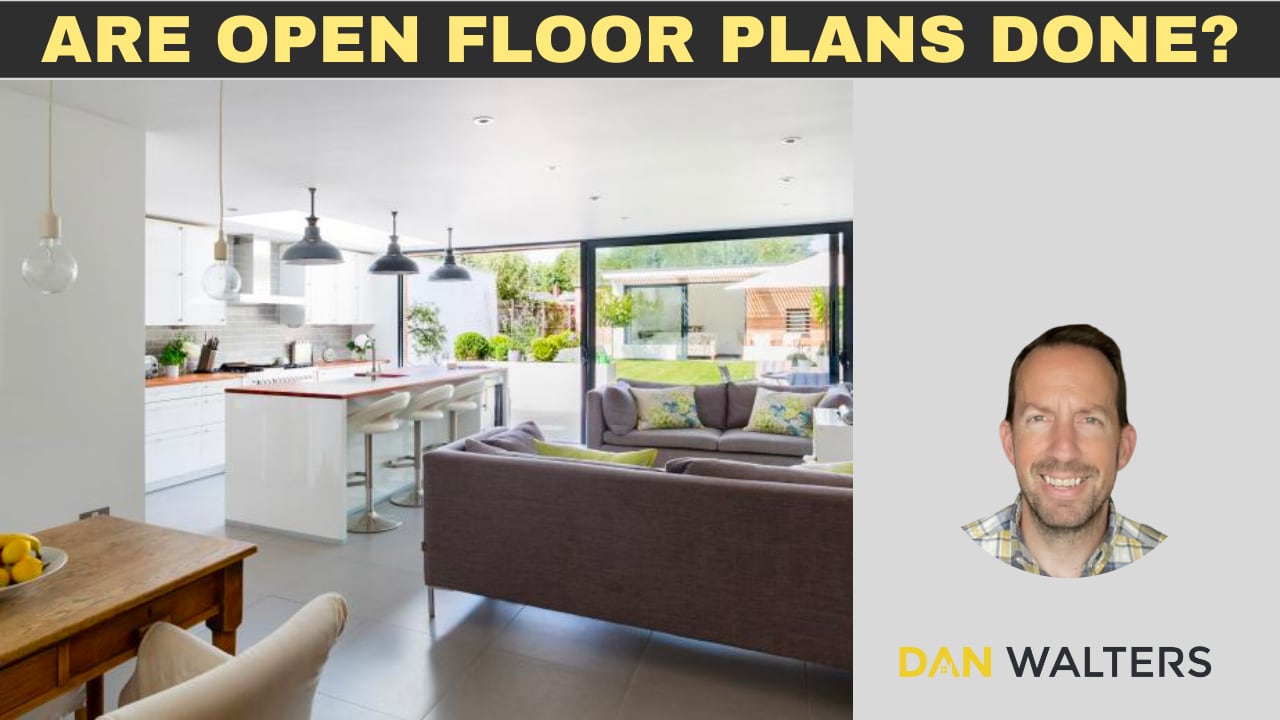

In the early 2000s, open floor plans became the layout everyone wanted. Originally made popular in the mid-1900s by architects like Frank Lloyd Wright, today you can't really watch a real estate tv show without a buyer saying the want an "open concept" or a homeowner asking their contractor for the same. It's ubiquitous.
But has the tide started to turn in the real world?
Why People Like Open Layouts
- Open layouts make homes feel larger, at least while you're in the rooms included in the often-called great room.
- Parents like being able to see the kids in the living room while they prep dinner in the kitchen.
- Entertainers like being part of the social flow, even if they're in the kitchen fulfilling host duties.
- When people gather, they often cluster in the kitchen; an open plan creates more room for this to happen.
- Open plans allow people to engage in different types of activities while still feeling connected, given they can see one another.
- Open layouts allow more of your home - be it architecture, furnishings or views - to be visible at all times.
- By removing walls, you create more flexibility in how spaces may be used.
- Less space may be wasted when walls are removed and fewer "cleared walkways" are required.
- Right now, they feel more modern and "to today's style"
Why Some Don't Like The Open Plan Model
- Sometimes, large rooms can feel too large when everything is wide open. Rooms might feel echoey, impersonal, or cold.
- Kitchens are historically less clean than dining and living rooms, but open floor plans leave any mess on full display.
- Speaking of messes, a mess in any room is visible by all rooms in the open design. There's really no hiding it.
- Privacy - sometimes, you don't want to be on full display in all you do, whether it's having a snack, reading, or sneaking away into the other room.
- Noise - open plans make it harder to get away from the living room tv or video games while you're cooking, cleaning or just looking for quiet downtime.
- Smells - most commonly from food - are harder to contain. Your living room is more likely to smell like salmon and your kitchen more like the wet dog that just came inside - in an open layout house.
- Less storage - walls create room for shelves or cabinets. Without the walls, the storage tends to decrease significantly.
- They can be costlier to heat and cool.
- For art lovers, fewer walls means fewer places to showcase their favorite items.
- Painting can be harder if you don't want all rooms the same color. In open plans, it can be tough to know where to stop with one color and start with the next.
- Open make it tougher for rooms to have specific, dedicated uses.
So....Are They on Their Way Out?
As of now, it doesn't really look like it, though tweaks might emerge. The pandemic resulted in people being home more (involuntarily) and that trend appears set to continue (voluntarily), if at a less exaggerated level.
With more people working at home than pre-2020, more private spaces might be desired. Also, larger homes might include partial walls (not short walls, but walls that come partway into the room) to create more definition, without actually created separated, segregated rooms.
It's likely we'll see more room divider options, as well, though that may not have an impact in initial design or construction choices during remodels. That said, a 2021 study showed a 40% reduction in the number of requests for homes to be made "more open", which is thought to be at least partly due to pandemic life, where everyone was home together more and the open plan's challenges were more apparent.
As well, studies show the trend of the kitchen as the epicenter of home life going down, which might remove some of the concerns about "closed off" kitchens that helped make the open plan so hot.
What do you think - open, closed off, or some sort of hybrid? I'd love to hear your thoughts!