
The 3% Fever Dream: Why 6% Interest Rates Are the New Normal in Portland (and Why You Shouldn't Wait)
![[HERO] The 3% Fever Dream: Why 6% Interest Rates Are the New Normal in Portland (and Why You Shouldn't Wait)](https://cdn.marblism.com/2tbWA2M-bjc.webp)
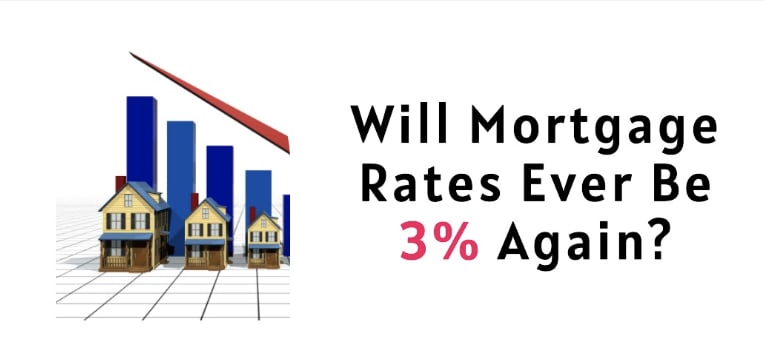
If you're waiting for mortgage rates to drop back to 3%, I've got news: you're waiting for a unicorn. Those pandemic-era rates weren't the baseline: they were a government-subsidized anomaly that artificially deflated borrowing costs for a brief window. Now that we're sitting at 6% in early 2026, the real question isn't if rates will return to "normal." They already have.
And if you're in the Portland housing market wondering whether to buy now or wait for some mythical rate drop, the math is pretty clear: waiting could cost you more than moving forward.
The 3% Era Was Never Sustainable
From roughly 2010 to 2022, mortgage rates hovered between 3% and 5%. That sounds like a long time, but it was fundamentally artificial. The Federal Reserve was actively purchasing mortgages on a large scale, which kept rates suppressed. When inflation spiked and the Fed pivoted its monetary policy in 2022, those subsidies ended. Rates normalized: which is to say, they went up.
Here's the thing: 6% isn't high. Historically, it's middle-of-the-road. Mortgage rates have oscillated between 6% and 8% multiple times over the past few decades. In the 1990s and early 2000s, 6% was considered good. Before that? Rates in the double digits were standard.
The idea that 3% was "normal" is a psychological trap. It wasn't normal: it was a once-in-a-generation windfall created by extraordinary economic circumstances. Expecting it to return is like expecting gas prices to drop back to $1.50 a gallon. It's not happening unless something catastrophic occurs.
What 6% Actually Means for Your Monthly Payment
Let's get specific. Say you're looking at a $500,000 home in Portland: pretty standard for a decent single-family home in a solid neighborhood right now. With a 20% down payment ($100,000), you're financing $400,000.
At 6% interest over 30 years, your monthly principal and interest payment is approximately $2,398.
If rates magically dropped to 5%, that payment would fall to around $2,147: a savings of $251 per month. Not nothing, but also not life-changing for most buyers in this market.
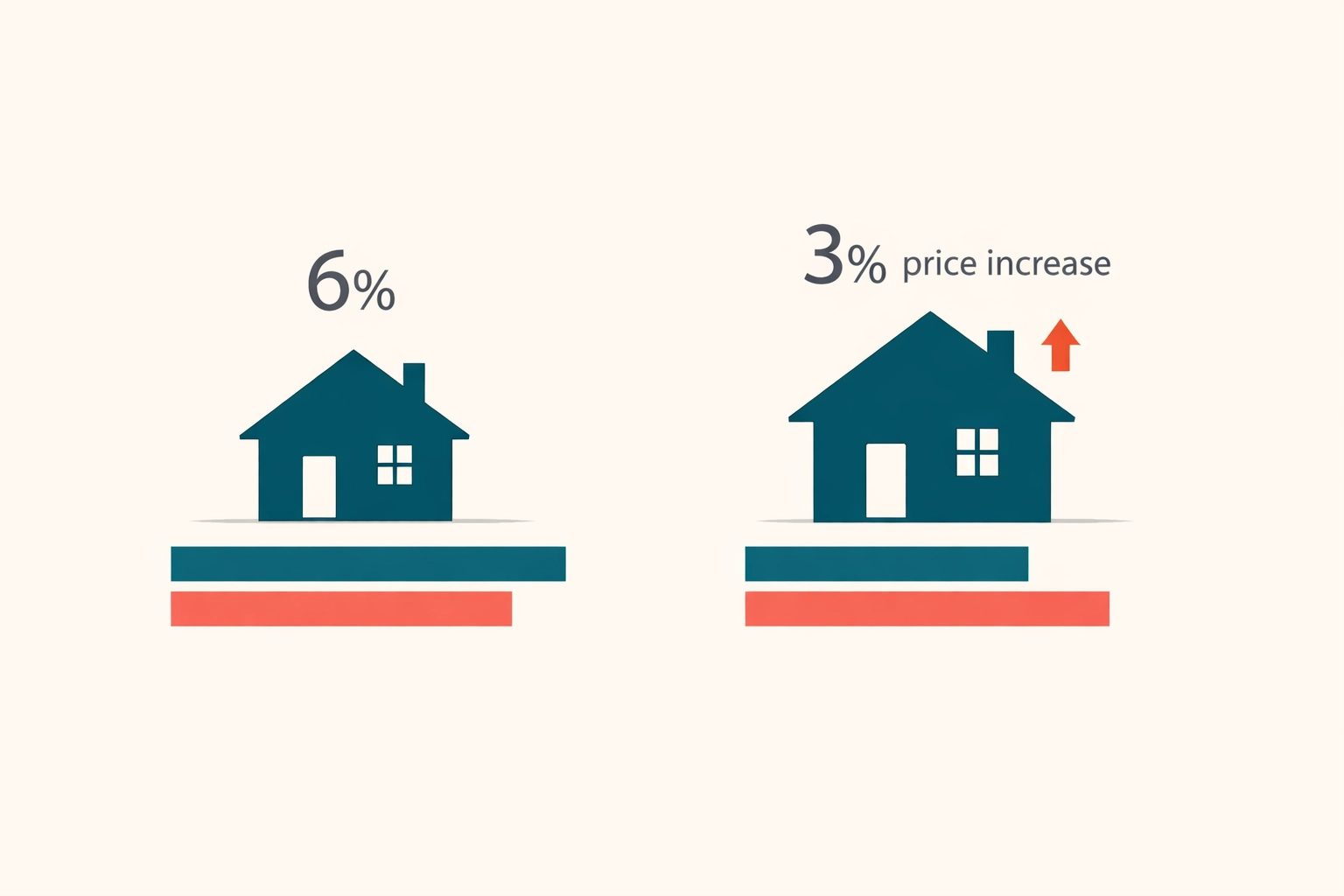
Now here's where it gets interesting: home prices in Portland have remained relatively flat over the past couple of years, but that won't last forever. If home prices increase even 3% annually while you wait for a rate drop that may never come, that $500,000 home becomes $515,000 in a year. At 6% with a 20% down payment, you're now financing $412,000, and your monthly payment jumps to $2,470: more than you'd pay today, even if rates dropped slightly.
The cost of waiting compounds. Every month you delay is another month of rising home values, missed equity-building, and rent payments that disappear into someone else's pocket.
Why 6% Is the New Baseline (and That's Okay)
Bankrate's 2026 forecast projects an average mortgage rate of 6.1% for the year, with potential lows around 5.7% and highs near 6.5%. Translation: we're not seeing 3% again unless the federal government returns to large-scale mortgage purchasing, which is highly unlikely in most economic conditions.
But here's the silver lining: affordability has actually improved compared to a year ago. Rates have dropped approximately 1% from their 2023 peaks, which is equivalent to home prices falling 10-12%. If you bought at 7% last year, you could potentially refinance into today's 6% environment and see immediate savings. If you're buying now, you're getting both stable pricing and moderately improved rates.
The Portland Advantage
Portland's housing market has a few things working in its favor right now. Home prices in the metro area have stabilized after years of rapid appreciation. You're no longer bidding against 15 other buyers with escalation clauses and waived inspections. Inventory is slowly improving, giving buyers more options and negotiating power.
Wage growth across the region has also been solid. Households earning the regional median income of around $124,100 are still facing affordability pressure at 6%, especially when factoring in property taxes and insurance. But that pressure isn't improving by sitting on the sidelines. If anything, it's worsening as the cost of renting continues to climb.
The Real Cost of Waiting: A Portland Case Study
Let's run a realistic scenario for a Portland buyer:
Scenario A: Buy Today
- Home price: $500,000
- Down payment: $100,000 (20%)
- Loan amount: $400,000
- Interest rate: 6%
- Monthly P&I: $2,398
Scenario B: Wait One Year (Assuming 3% appreciation, rates hold at 6%)
- Home price: $515,000
- Down payment: $103,000 (20%)
- Loan amount: $412,000
- Interest rate: 6%
- Monthly P&I: $2,470
- Plus: 12 months of rent at ~$2,200/month = $26,400 in sunk costs
In Scenario B, you've paid $26,400 in rent, your monthly mortgage payment is $72 higher, and you've missed a year of equity growth. Even if rates dropped to 5.5% in that year, the math still doesn't work in your favor once you factor in appreciation and lost time.

What This Means for You
If you're waiting for rates to drop, ask yourself: what's the trigger? Is it 5.5%? 5%? And what happens if home prices climb faster than rates decline?
The reality is that 6% is likely the new normal for the foreseeable future. The sooner you accept that, the sooner you can make a smart buying decision based on today's market, not some hypothetical future scenario.
Bottom Line
The 3% mortgage rates of 2020-2021 were a financial fever dream: a temporary blip caused by unprecedented government intervention. They're not coming back anytime soon, and waiting for them is a losing strategy.
At 6%, you're working with a historically reasonable rate. If you're financially ready to buy, have stable income, and plan to stay in your home for at least five years, now is as good a time as any to make your move in the Portland market. Prices are stable, inventory is improving, and you're not competing in the feeding frenzy that defined the past few years.
The best time to buy is when you're ready: not when rates hit some arbitrary number that may never materialize.
If you're ready to explore what's available in the Portland housing market or want to run the numbers on your specific situation, let's talk. I'll walk you through the real math, not the fantasy version.
Dan Walters, Principal Broker
The W Real Estate Group at Keller Williams Portland Elite