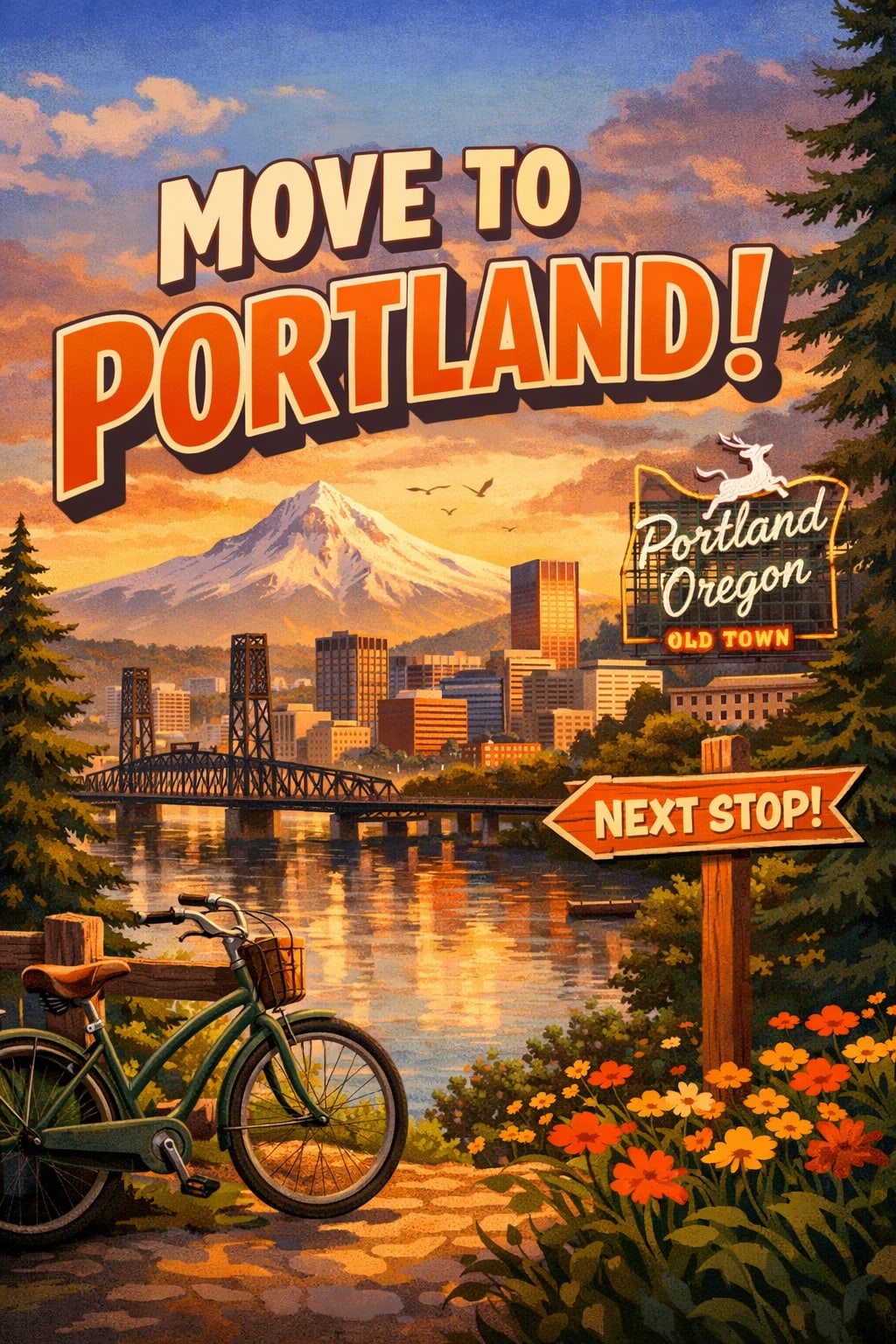

The 5 Real Reasons People are Flocking to Portland in 2026
![[HERO] The 5 Real Reasons People are Flocking to Portland in 2026](https://cdn.marblism.com/EnAKhM7HYYW.webp)
Portland is currently experiencing a shift from the rapid, chaotic growth of the last decade toward a more intentional, selective type of migration. While the overall numbers show a stabilized market compared to the mid-2010s, the people moving here in 2026 are doing so with a specific checklist in mind. They aren't just looking for a house; they are looking for a functional lifestyle that is becoming increasingly rare in other major West Coast hubs.
If you are looking to buy a house in Portland, Oregon, you have likely noticed that the conversation has changed. It is no longer just about the coffee or the rain; it is about urban design, geographic utility, and long-term sustainability. As a Portland real estate agent, I see these five factors driving almost every relocation conversation we have today.
1. The "15-Minute City" Reality
While many global cities are currently debating the merits of the "15-minute city" concept, Portland has been living it for decades. The ability to walk from your front door to a high-end grocery store, a local hardware shop, and a world-class bistro within fifteen minutes isn't a marketing gimmick here: it is the baseline expectation for many of the best neighborhoods in Portland, Oregon.
Neighborhoods like Richmond and Sellwood have perfected this balance. In Richmond, you have the SE Division corridor providing a density of amenities that makes owning a car feel almost optional. Sellwood offers a more established, "village" feel where the antique shops and river access are just blocks away from quiet residential streets.

Mississippi Avenue in North Portland is another prime example. It has evolved into a self-contained ecosystem where residents can work, play, and shop without ever crossing a bridge or getting stuck in I-5 traffic. For buyers coming from sprawling metros like Los Angeles or Phoenix, this density of convenience is often the primary selling point.
Are you tired of spending two hours a day in a metal box on the freeway? In Portland, we measure "commutes" by the number of podcasts you can finish while walking to get a bagel. It’s a massive flex in an era where time has become the most valuable commodity. If you're looking for a home that keeps you close to the action, check out some of these playgrounds and parks that anchor our most walkable communities.
2. The "Access Factor": Surf in the Morning, Slopes by Sunset
The geographic layout of the Pacific Northwest provides a "utility of location" that few other places on earth can match. In 2026, we are seeing a massive influx of "lifestyle-first" remote workers who choose Portland specifically because of the 90-minute rule. You are approximately 90 minutes from the rugged Oregon coast and 90 minutes from the alpine environments of Mt. Hood.
This isn't just hyperbole. It is entirely possible: and people actually do this: to catch a morning session at Short Sands beach and be sitting in a mountain lodge with a local craft beer by the time the sun goes down. This proximity to diverse environments allows for a level of weekend spontaneity that simply doesn't exist in the Midwest or the South.
For those who prioritize the outdoors, finding a home with ocean views or mountain proximity is a top priority. When you work with a Portland realtor, you’ll find that we don’t just talk about square footage; we talk about your proximity to the trailhead. The city serves as a launchpad for a high-adventure lifestyle that is baked into the local culture.
3. Relative Value: The Lifestyle-Per-Dollar Ratio
Let’s be honest about the numbers. Portland is not "cheap" by national standards, but in the context of the West Coast, it remains a bargain. When compared to the astronomical costs of living in Seattle, San Francisco, or San Jose, Portland offers a significantly higher "lifestyle-per-dollar" ratio.
In 2026, we are seeing a "Sub-6% Pivot" where buyers who were sidelined by high interest rates are realizing that their equity goes much further here. You can often find a restored 1920s craftsman with a well-maintained garden in a premier Portland neighborhood for the price of a cramped condo in the Bay Area.

Per recent market data: “The Portland metro area continues to attract those leaving expensive West Coast cities seeking a city that actually functions while maintaining a lower barrier to entry for homeownership...”
This relative affordability allows for a higher quality of life. Instead of putting every cent toward a mortgage, residents have the discretionary income to enjoy the local food scene, travel, and invest in their homes. It’s a "smart" financial move disguised as a lifestyle upgrade. If you want to see how others have navigated this transition, reading about a rewarding experience from past buyers can provide some perspective on the current market.
4. "Neighborhood Identity" and Finding Your Tribe
Portland is not a monolithic city; it is a collection of 95 distinct micro-cities. Each neighborhood has its own "soul," its own architectural vernacular, and its own unspoken social contract. This is one of the most common reasons people stay once they move here: they find their specific tribe.
Whether you are looking for the historic, tree-lined prestige of Laurelhurst or the edgy, industrial energy of the Central Eastside, there is a corner of the city that feels like it was designed specifically for you. This makes the process of buying a house in Portland, Oregon, feel much more personal than in cities dominated by cookie-cutter subdivisions.

If you prefer a peaceful and quiet atmosphere, you might look toward the West Hills or the deeper pockets of Southeast. If you want to be in the middle of a creative hub, the Alberta Arts District might be your destination. A knowledgeable Portland real estate agent can help you navigate these nuances to ensure you aren't just buying a house, but joining a community.
What kind of environment makes you feel at home?
- Do you want to be able to walk to a neighborhood pub where the bartender knows your name?
- Are you looking for a quiet street where kids can ride bikes without through-traffic?
- Do you need a large backyard for a private garden?
These are the questions that define the Portland search.
5. Long-Term Climate Resiliency
In 2026, climate resiliency has moved from a "nice-to-have" to a top-tier driver for real estate investment. We are seeing an increasing number of people relocating from the South and Southwest: regions plagued by extreme heat waves and water scarcity: toward the Pacific Northwest.
Portland’s access to water and its relatively stable (though undeniably damp) climate make it a strategic choice for buyers with a 20-year horizon. People are looking at the map and realizing that "green" is a good long-term investment. The city’s commitment to urban forestry and green spaces adds an extra layer of protection against the urban heat island effect seen in other major cities.

Moving here is becoming a "defensive" real estate play. Buyers are prioritizing locations that offer long-term environmental stability. While we still have our quirks (looking at you, February ice storms), the overall outlook for the region remains strong. Many families are looking for a heavenly spot for their family that won't be uninhabitable in two decades.
What This Means for You
The Portland market in 2026 is one of intentionality. People aren't moving here because of a fad; they are moving here because the city offers a specific set of solutions to modern problems.
If you are considering making the move, the first step is understanding which of these five factors matters most to you. Are you chasing the 15-minute lifestyle, or are you looking for a climate-stable investment for your family’s future?
Working with a Portland realtor who understands the "micro-market" of each neighborhood is essential. The market moves fast, and the differences between two blocks can be significant. If you're ready to start the conversation, I’m here to provide local first-hand insights and help you find exactly where you fit in this city of 95 neighborhoods.
Bottom Line:
Portland continues to evolve, but its core appeal: walkability, geographic access, value, identity, and resiliency: remains as strong as ever. Whether you're coming from across the country or just across the river, there is a seat at the table (and probably a very good cup of coffee) waiting for you.
Feel free to reach out if you have questions about specific neighborhoods or the current state of the market. We’re always here to help you navigate the process of finding your place in the Rose City.
Dan Walters, Realtor Owner, Principal Real Estate Broker The W Real Estate Group at Keller Williams Portland Elite