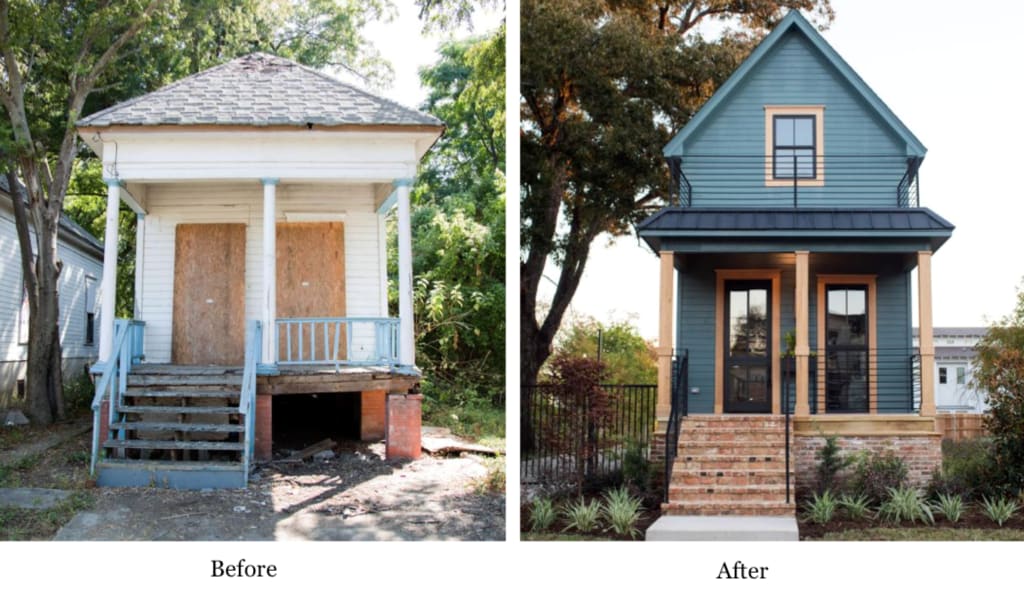

Charm vs. The Headache: What Every Portland Buyer Needs to Know About 'Soul' vs. 'Bones'
![[HERO] Charm vs. The Headache: What Every Portland Buyer Needs to Know About 'Soul' vs. 'Bones'](https://cdn.marblism.com/6BsEGGg9ZOk.webp)
Buying an old house in Portland is a lot like dating someone who is incredibly attractive but doesn't have a checking account. You are immediately drawn to the external beauty: the high ceilings, the wavy glass windows, and the way the light hits the original Douglas fir floors at 4:00 PM in November. It is easy to fall in love with a 1920s Bungalow in Sellwood or a stately Foursquare in Laurelhurst. These homes have "soul," a quality that modern builder-grade construction simply cannot replicate.
However, soul doesn't pay for a $25,000 main sewer line replacement. If you are planning to buy a house in Portland, Oregon, you need to be able to distinguish between "charming character" and "structural nightmare." While the aesthetic details are what make you write the offer, the "bones" of the house are what determine whether you’ll be happy in five years or filing for bankruptcy to fix a sinking foundation.
Understanding this distinction is the difference between a rewarding homeownership experience and a decade of expensive headaches.
The Seduction of Portland Soul
When people talk about why they want to live in the best neighborhoods in Portland, Oregon, they aren't usually talking about the efficiency of the insulation. They are talking about the built-in dining room buffets with leaded glass doors. They are talking about the hexagonal tile in the bathroom and the heavy wood doors that close with a satisfying, solid "thunk."
There is also that specific "old house smell." We aren't talking about the smell of neglect or wet basement; we’re talking about the scent of seasoned cedar and decades of floor wax. It feels permanent. In an era of "fast furniture" and "luxury vinyl plank," walking into a home in Irvington or Grant Park feels like stepping into a piece of history.
This soul is valuable. It drives Portland Oregon home values because these features are increasingly rare and incredibly expensive to recreate. A skilled Portland real estate agent knows that for many buyers, these details are non-negotiable. You want the history, and you are willing to pay for it. But you shouldn't pay for it twice: once at the closing table and once when the plumbing explodes.
Defining the 'Bones' of a Home
In real estate terminology, "bones" refers to the physical infrastructure that keeps the house standing, dry, and functioning. As research notes: "Good bones means the home's physical foundation is in good condition: not cracked or sagging: along with quality infrastructure like the roof, flooring, and HVAC and electrical systems."
Essentially, if you could strip away all the wallpaper, the paint, and the furniture, the bones are what is left. If the bones are good, you can change almost anything else. If the bones are bad, you are fighting an uphill battle against gravity and physics.
When you are touring homes with your Portland realtor, it is easy to get distracted by the staging. You see a beautiful rug and a mid-century modern sofa, and you forget to look at the ceiling for water stains. You see the updated kitchen backsplash and forget to ask if the dishwasher is actually hooked up to 100-year-old galvanized pipes.
The 'Headache' List: Common Portland Old-House Issues
Portland has a specific set of "old house" problems that are common in our most popular neighborhoods. If you are looking to buy a house in Portland, Oregon, you need to keep a mental checklist (or have us keep one for you) of the following potential headaches:
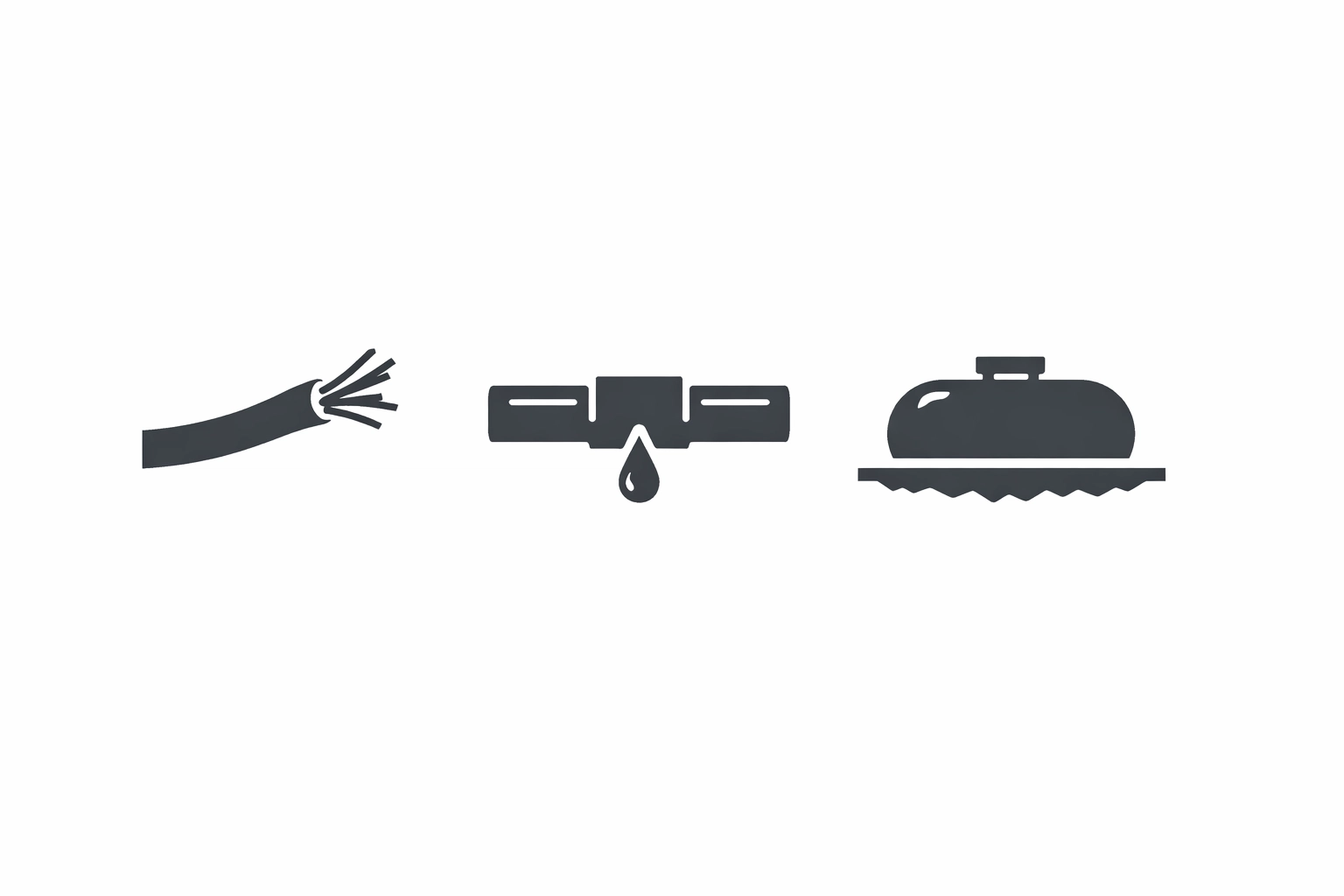
1. Knob and Tube Wiring If the house was built before 1950, there is a chance it still has knob and tube wiring hiding behind the plaster. While it was state-of-the-art during the Taft administration, it isn't designed for modern life. It isn't grounded, which is bad for your electronics, and many insurance companies will flat-out refuse to cover a home that still has it active.
2. Galvanized Plumbing and Sewer Lines Old steel pipes rust from the inside out. You might have great water pressure for the first five minutes of a tour, but once the pipes "warm up," the flow drops to a trickle. Like your arteries, all may look good outside, but danger may lurk inside.
Even worse is the sewer line. In Portland, many older homes have sewer lines made of clay or "Orangeburg" (essentially tar-paper pipes). Over 80 years, tree roots find these lines and turn them into Swiss cheese. Replacing a sewer line under a paved driveway or a mature Douglas Fir is not a cheap weekend project.
3. The Buried Oil Tank Before we had high-efficiency gas furnaces, Portlanders heated their homes with oil stored in tanks buried in the yard. If a tank was decommissioned improperly: or not at all: it can leak. The DEQ (Department of Environmental Quality) does not play around with soil contamination. Finding an abandoned tank after you close is a headache you do not want.
4. Unreinforced Foundations We live in a seismic zone. Many older Portland homes are essentially sitting on top of their foundations rather than being bolted to them. While the "soul" of the house is beautiful, the "bones" might literally slide off the base during a significant earthquake.
The 'Don't Skip the Inspection' PSA
It is very tempting in a competitive market to waive inspections or "take it as-is" just to get the house. This is how "charm" turns into a financial ruin. You might love the original windows, but if those windows are the only thing keeping the wall from bowing because of a foundation shift, you need to know that before you sign the papers.
A $30,000 repair bill for a new roof and foundation work will quickly sour your love for those vintage built-ins. We always tell our clients that it is better to lose a house in the inspection phase than to win a house that will eventually own you. You want to become an aware buyer who understands exactly what they are signing up for.
Why You Can’t Always Trust Your Eyes
A home can have excellent bones but look like a disaster. We see this all the time: a house with a rock-solid foundation, updated electrical, and a brand-new roof, but it’s covered in 1970s shag carpet and wood paneling. This is the "diamond in the rough" that every Portland real estate agent looks for.
Conversely, a "flip" might look incredible on the surface. It has the white shaker cabinets, the quartz countertops, and the trendy black hardware. But if the flipper spent all their money on the "soul" (the cosmetics) and ignored the "bones" (the leaking crawlspace), you are buying a headache wrapped in a pretty bow.
What to ask yourself during a tour:
- Is the floor level, or am I walking slightly uphill to get to the kitchen?
- Do the windows actually open, or have they been painted shut for thirty years?
- When was the electrical panel last updated?
- Is there a weird "musty" smell in the basement that the scented candles are trying to hide?

The W Real Estate Group Edge
At The W Real Estate Group at Keller Williams Portland Elite, we are suckers for a beautiful historic home. We live in these neighborhoods, and we appreciate the craftsmanship of a century-old Foursquare. But our job is to be the voice of reason when you are swooning over a breakfast nook.
We pride ourselves on being "house nerds." We look at the electrical panels, we peek into the crawlspaces, and we know how to spot the signs of a failing sewer line before the inspector even arrives. Our goal is to ensure you buy a home that remains a sanctuary, not a construction site.
One of the ways we help our clients is by maintaining deep relationships with local contractors. If we find an issue during inspections, we don't just hand you a report and wish you luck. We help you get real-world quotes so you can negotiate the price or walk away with your deposit intact. We want you to have a positive and efficient experience where you feel in control of the transaction.
Bottom Line: Soul is Good, Bones are Better
You should never settle for a home that doesn't move you. Portland has too much personality to live in a beige box if that isn't your style. However, you must prioritize the structural integrity of the property to protect your investment and your peace of mind.
If you find a house with soul and good bones, buy it. If you find a house with soul but bad bones, make sure the price reflects the work required to make it safe and functional. And if you find a house with no soul but great bones? That’s just a blank canvas waiting for you to add your own character.
Whether you are looking for local first-hand insights on a specific neighborhood or you need an experienced and trustworthy partner to help you navigate the complexities of the Portland market, we are here to help.
The Portland market moves fast, but your due diligence shouldn't. Let’s find you a home that has the charm you want and the structural integrity you need.
Contact The W Real Estate Group If you’re ready to start your search for a home with both soul and solid bones, reach out to Dan Walters and the team. We’ll help you navigate the "headaches" so you can get straight to the "home."
Dan Walters, Realtor Owner, Principal Real Estate Broker The W Real Estate Group at Keller Williams Portland Elite Explore our testimonials